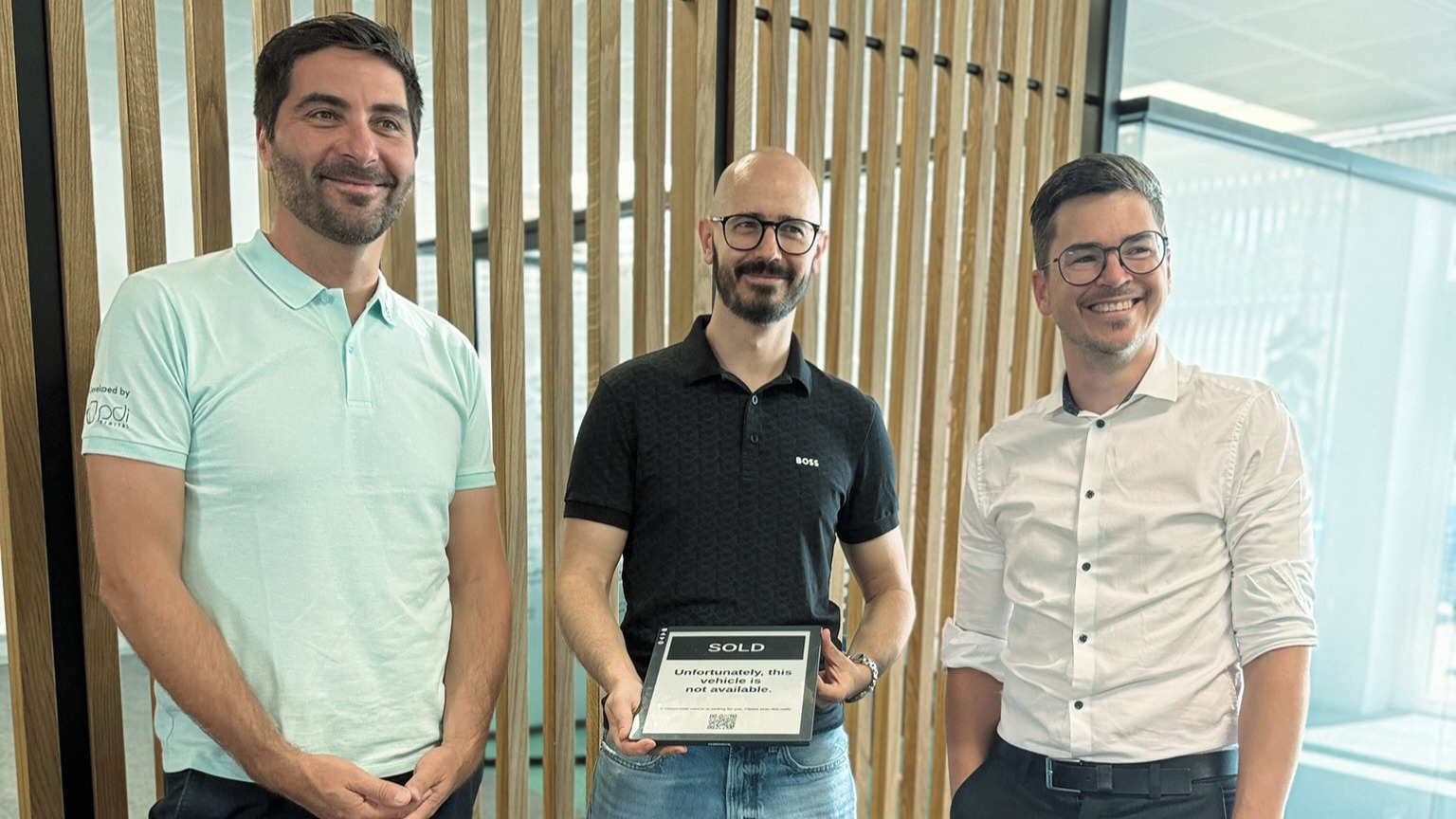
Why Automotive Retail Forced Us to Rethink Display Technology
“Every technology starts with a problem worth solving. Ours started with a simple realization: a vehicle isn’t just another product on a shelf.”
At First Glance, Automotive Retail Looks Like Retail
Walk into a dealership and you’ll immediately recognize familiar retail elements.
Products are displayed.
Customers compare prices.
Information influences purchasing decisions.
From an engineering perspective, however, this comparison ends surprisingly quickly.
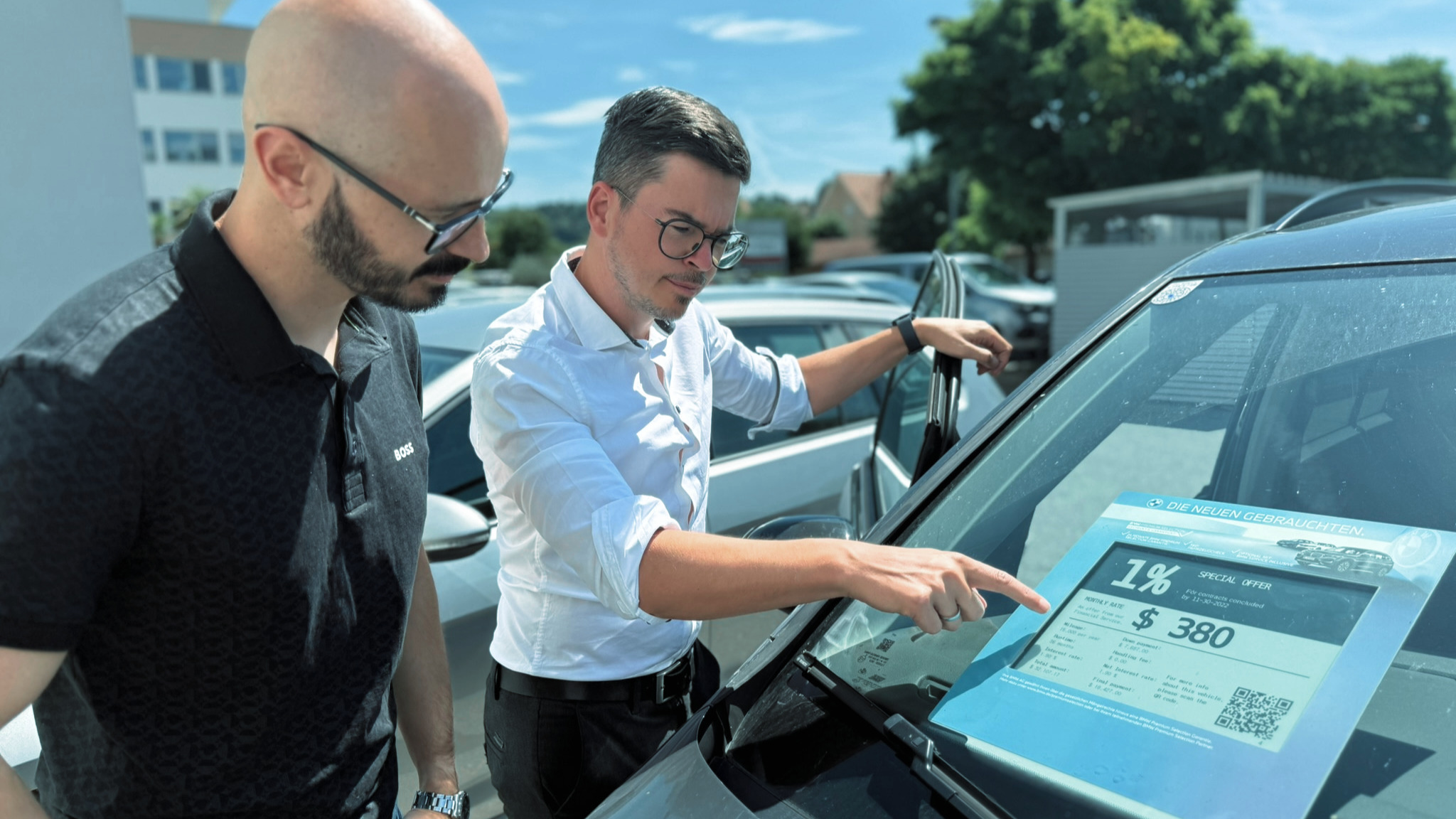
Unlike products in traditional retail, vehicles move continuously throughout their lifecycle. They are transferred between dealership locations, taken on test drives, parked outdoors, serviced in workshops and handed over to customers. At the same time, pricing, promotions and vehicle information change more frequently than ever before.
The team behind sepioo® Cellular quickly realized that these operational realities fundamentally change the requirements for display technology.
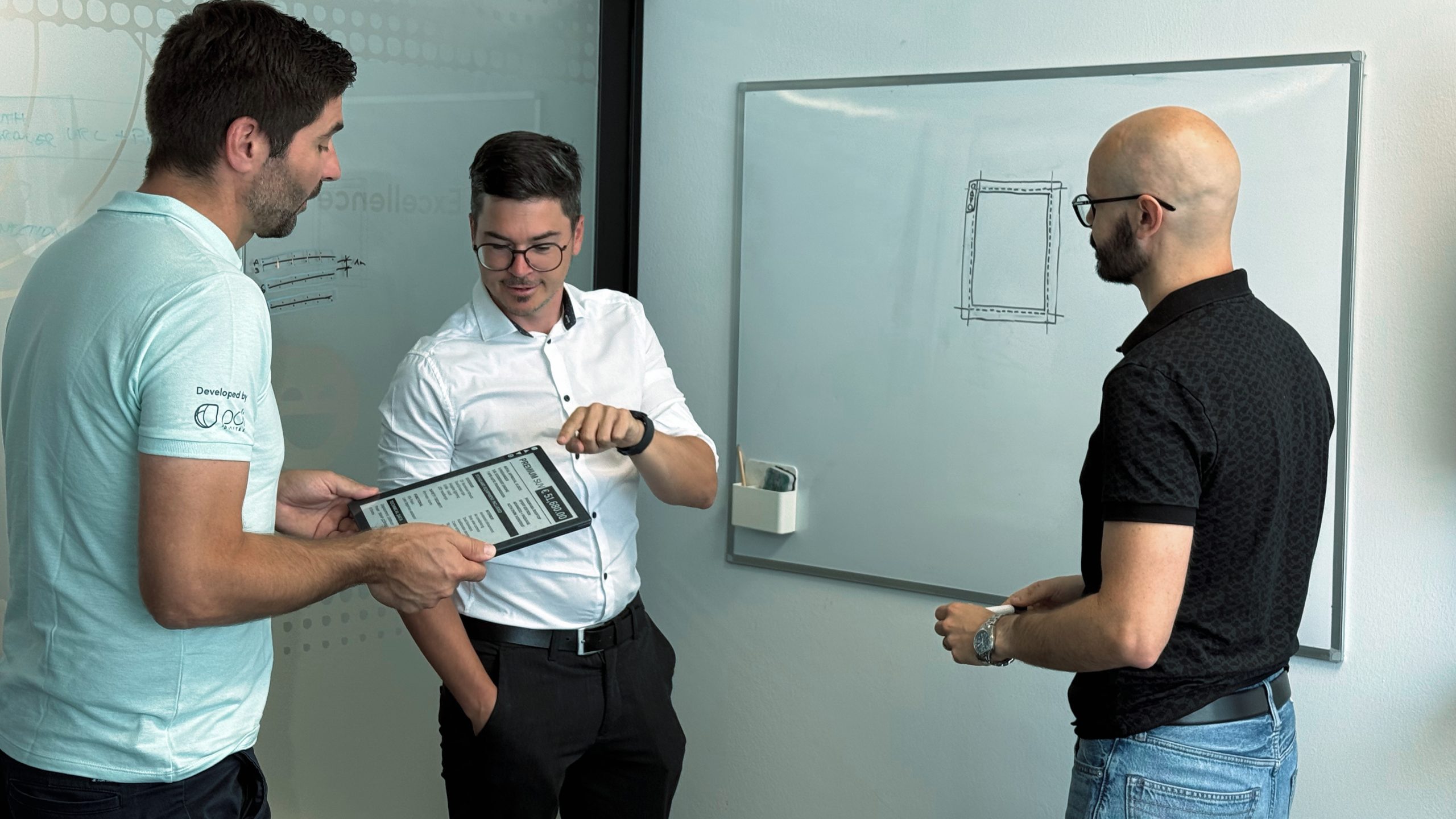
As Markus Rumpf, CTO at PDi Digital, explains:
"We realised it when the display became part of the vehicle workflow - not just a static information point."
That single realization became the foundation for every engineering decision that followed.
Every engineering project starts with the same question: What problem are we actually trying to solve? For Markus, the answer was clear - Automotive Retail required a completely different engineering approach than traditional retail.
Three Perspectives. One Engineering Story.
The development of sepioo® Cellular wasn’t driven by a single discipline.
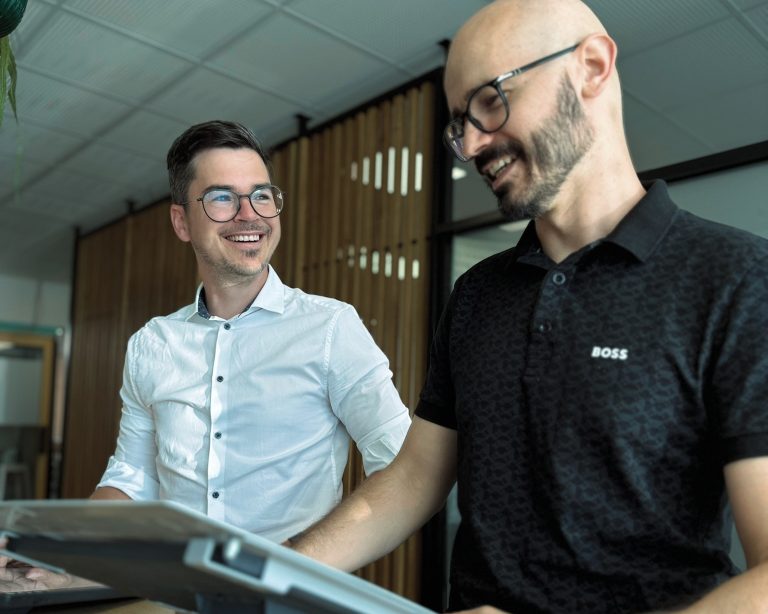
It was shaped by three different perspectives, each contributing to the same goal: designing technology specifically for the realities of Automotive Retail.
Markus Rumpf – CTO
The Vision
Markus challenged one of the project’s earliest assumptions: Automotive Retail isn’t simply another retail application. His focus was on defining an architecture that could support moving assets, scalable deployments and long-term reliability.
Matej Stabuc – Engineering
The Mastermind
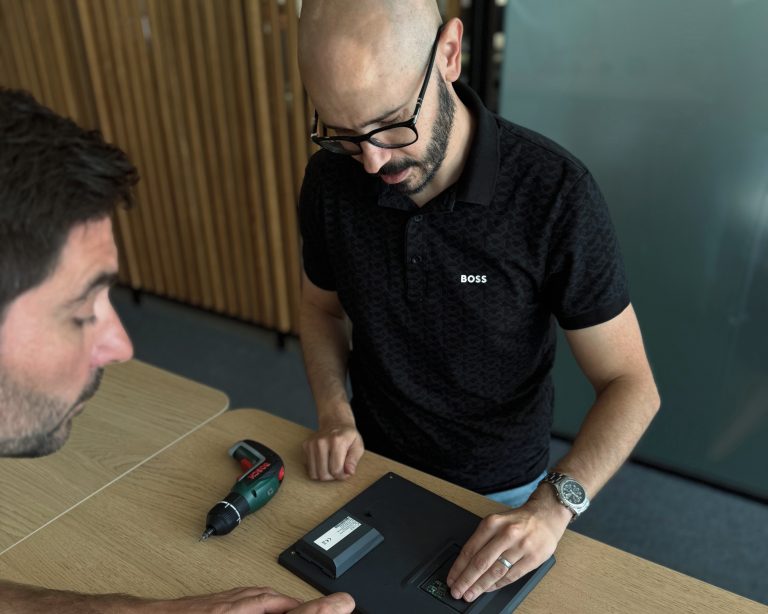
Matej turned architectural ideas into engineering reality. From battery management and cellular communication to environmental validation and firmware, he tackled the technical challenges that ultimately shaped the product.
Roland Enzinger – Head of Business Development & Partner Management
The Market Perspective
Roland works closely with dealerships and technology partners every day. His perspective bridges engineering and real-world customer requirements, helping ensure that technical decisions solve practical challenges—not just technical ones.
Engineering Moment #1
A Moving Asset Requires a Different Architecture
Traditional electronic shelf labels were designed for products that remain in fixed locations.
Vehicles don’t.
This changes everything.
Displays must operate independently from fixed infrastructure, tolerate changing network conditions, consume very little power and remain operational across multiple dealership locations.
According to Markus, the team’s objective was never simply to develop another display.
Instead, they focused on building a platform that could reliably operate under real dealership conditions.
"The goal was to build a product that works reliably in real automotive operations - not only in controlled environments."
One of the most important architectural decisions was separating the device layer from the platform layer.
This allows the display hardware to focus on reliability, power efficiency and environmental robustness, while the platform remains open for future integrations and dealership-specific workflows.
At first glance, this architectural decision remains invisible.
In practice, it enables the flexibility that modern automotive retail increasingly demands.
Engineering Moment #2
Connectivity Starts Long Before the First Data Packet
Behind every seemingly simple product feature lies a series of engineering decisions. Connectivity, power management and hardware design were never treated as isolated components—they were engineered as one integrated system.
One of the most common questions customers ask is:
“Why Cellular?”
From an engineering perspective, the more interesting question is:
“What actually happens before a device sends its first piece of data?”
According to Matej, the answer is far more complex than many people expect.
"Cellular communication is not just sending data."
Reliable communication depends on antenna behaviour, RF optimisation, modem firmware, network registration, roaming behaviour, security protocols, retries, recovery mechanisms and power-saving states.
Every mobile operator behaves slightly differently.
Every network introduces new variables.
The engineering challenge wasn’t getting the device online.
It was making this complexity completely invisible for the customer.
As a result, dealerships don’t have to think about connectivity.
They simply deploy the display.
Engineering Insight
Good connectivity isn’t defined by successful connections. It is defined by how gracefully a system recovers when conditions are no longer ideal.
Engineering Moment #3
Battery Lifetime Is a System Problem
Ask someone what determines battery lifetime and most people will answer:
“The battery.”
The engineering team would disagree.
Long battery life wasn't achieved by choosing a bigger battery. It emerged from countless discussions about power management, firmware behaviour and real-world operating conditions.
"Battery lifetime is not determined by capacity alone."
Instead, it is influenced by battery chemistry, charging behaviour, self-discharge, firmware logic, communication frequency, wake-up cycles, environmental conditions and the interaction between every electronic component inside the device.
Even something that appears trivial to users – displaying the remaining battery level – became a surprisingly demanding engineering task.
Rechargeable batteries behave differently depending on age, temperature and previous usage.
Simply measuring voltage is not enough.
Instead, sophisticated fuel gauging algorithms estimate how much usable energy actually remains.
These are the kinds of engineering challenges users never notice.
And that is exactly the point.
Engineering Moment #4
Outdoor Reliability Cannot Be Tested in Theory
Engineering doesn't end in the laboratory. Real-world dealership environments continuously challenge hardware, battery systems and connectivity in ways that controlled test conditions simply cannot reproduce.
Developing technology for outdoor environments sounds straightforward.
Testing it is not.
Climate chambers remain an essential part of product validation.
However, as Matej explains, laboratory conditions never tell the complete story.
A display mounted behind a vehicle windshield behaves differently than one placed inside a laboratory.
Heat distribution changes.
Battery temperatures differ from ambient temperatures.
Materials age differently.
Engineering therefore goes far beyond passing standardized laboratory tests.
It requires understanding how technology behaves after months and years in real dealership environments.
Engineering Moment #5
Good Engineering Is Almost Invisible
Perhaps the most interesting lesson from developing sepioo® Cellular is that the most important engineering decisions are rarely visible.
Customers notice long battery life.
Reliable connectivity.
Robust hardware.
What they don’t see are the countless design decisions that make those capabilities possible.
As Matej puts it:
"The engineering achievement I'm personally most proud of is making a highly complex system combining batteries, cellular connectivity, GNSS, antennas, sensors, display technology, firmware and outdoor mechanics feel simple and intuitive for the user."
That philosophy ultimately defines the product.
Technology should solve complexity – not expose it.
Looking Beyond the Display
For Roland Enzinger these engineering decisions are becoming increasingly relevant as dealerships continue their digital transformation.
"It is not a retail product that has simply been repurposed for automotive use."
Great products aren't created by one discipline alone. They emerge when technology vision, engineering expertise and market understanding come together to solve real-world challenges.
Instead, sepioo® Cellular combines Industrial IoT principles with the unique operational requirements of automotive retail.
The result is not simply a digital display.
It is connected infrastructure designed around moving assets, changing information and real-world dealership operations.
More Than a Display
Looking back, the development of sepioo® Cellular never started with a feature.
It started with a question.
What does Automotive Retail actually require?
Answering that question changed the way the team thought about display technology.
The result wasn’t simply another digital display.
It was an Industrial IoT solution designed around moving assets, changing information and real-world dealership operations.
Because in the end, great engineering isn’t measured by the technology people notice.
It’s measured by the complexity they never experience.
If this article sparked your curiosity, we’d love to continue the conversation.
Whether you’re exploring connected vehicle information, looking to modernize dealership operations or simply interested in the engineering principles behind sepioo® Cellular, our team is happy to share more insights.

 日本語
日本語  中文
中文