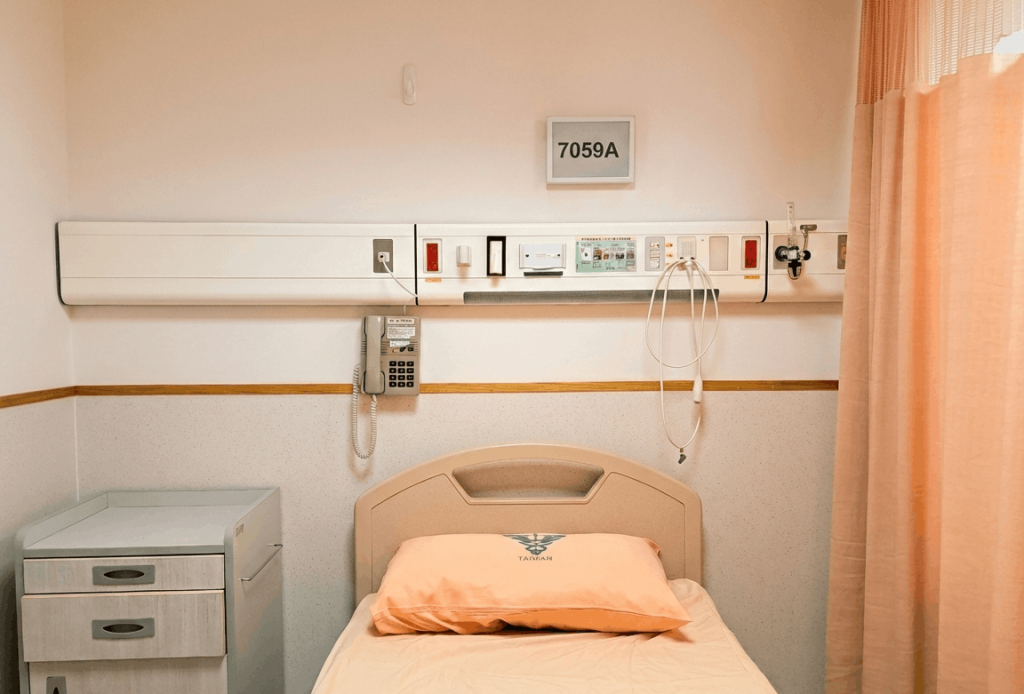
World’s First Full-Scale Smart Ward Transformation: 2,100+ Digital Bedside Displays at Chi Mei Medical Center
Setting a New Global Benchmark in Healthcare Automation
In the rapidly evolving landscape of healthcare, the transition from “digitized” to “automated” is the next great frontier. Chi Mei Medical Center, one of Taiwan’s largest and most prestigious healthcare institutions, has just crossed that frontier. In a record-breaking four-month implementation, the hospital group transformed its bedside communication across three major campuses, deploying over 2,100 digital displays powered by PDi Digital’s sepioo® technology. This project represents the world’s first full-scale smart ward transformation of this magnitude, proving that large-scale infrastructure can be modernized without clinical disruption.
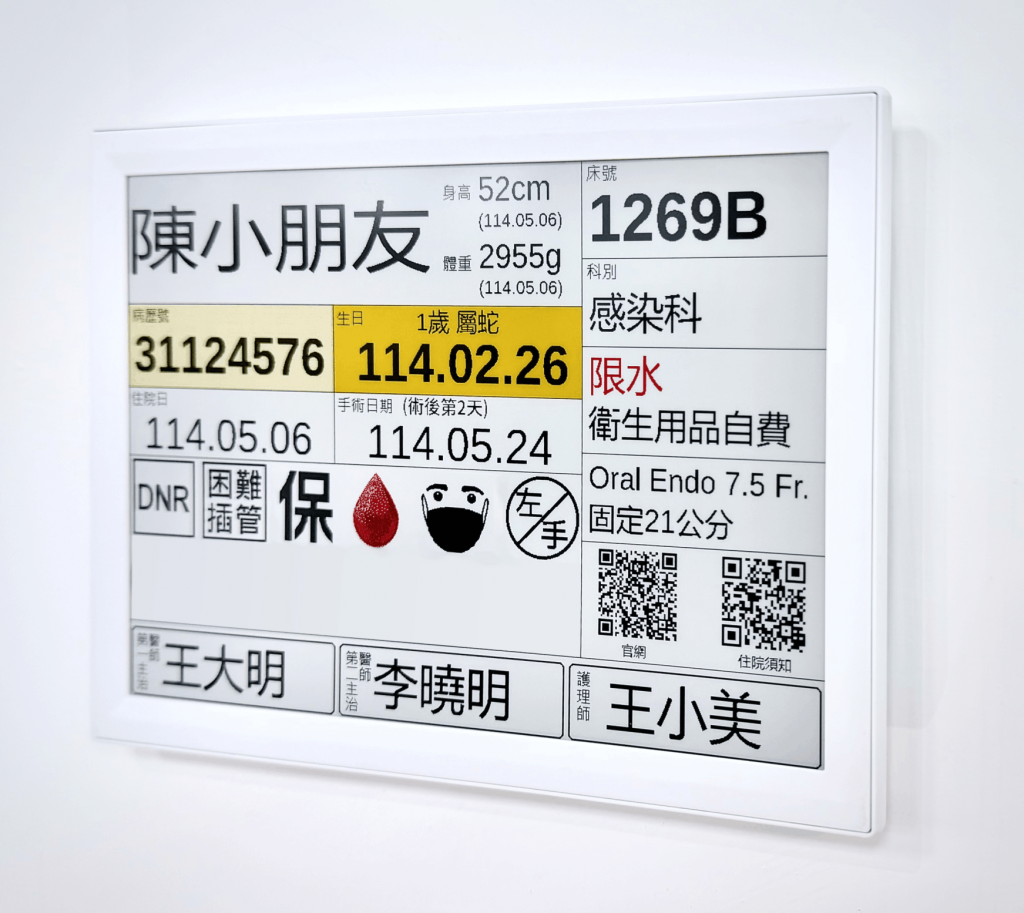
Chi Mei's Bedside Card
The Challenge: Beyond the Paper Trail
For decades, bedside communication relied on manual labor. Nursing staff were required to print, cut, laminate, and manually replace bedside cards whenever a patient’s status changed. In a facility with over 2,000 beds, these “small tasks” created a massive operational bottleneck:
Manual Burden: Thousands of hours lost to non-clinical paperwork.
Risk of Error: Potential discrepancies between the central Physician Orders and the physical card at the bedside.
Environmental Impact: Constant consumption of paper, toner, and plastic lamination. Chi Mei’s leadership recognized that true transformation required more than just a screen; it required a seamlessly integrated ecosystem.
The Solution: Intelligent Infrastructure Convergence
The cornerstone of this project was the sepioo® platform. To ensure a smooth rollout, PDi Digital implemented a solution that prioritized simplicity in infrastructure and complexity in capability.
Key Technical Highlights:
“Infraless” Integration: By leveraging over 450 existing Cisco 9115AX Wi-Fi access points via the Vusion IOx application, the hospital avoided the need for new gateways or invasive cabling.
Dynamic Automation: Using a powerful API integration with the Hospital Information System (HIS), the V300 9.7” displays update automatically based on real-time medical data.
Medical-Grade Resilience: The displays feature customized, resilient covers and mounting systems designed specifically for the rigorous hygiene standards of a clinical environment.
Measurable Impact: Reclaiming Time for Care
The results of this digital shift are measurable and immediate. By automating the bedside, Chi Mei Medical Center has achieved:
~50,000+ nursing hours saved annually, allowing staff to focus entirely on patient recovery.
90% reduction in manual bedside card handling.
60% reduction in ward walking time related to information updates.
A Vision for the Future: The "Silent Revolution"
With over 21 million hospital beds globally, the Chi Mei project serves as a replicable blueprint for the future of “Smart Hospitals. It demonstrates that ESG-driven transformation and high-tech efficiency can go hand-in-hand.
"The Chi Mei experience proves that with the right architecture and a human-centric design, electronic labels can successfully transition from retail to healthcare. We aim to strike the perfect balance between high-tech efficiency and compassionate care, creating lasting commercial and social value."
As Chi Mei Medical Center stands as a global reference site, PDi Digital remains committed to driving this “Silent Revolution,” one ward at a time.
Ready to Transform Your Ward?
The success at Chi Mei Medical Center proves that large-scale digital transformation doesn’t have to be invasive or time-consuming. With the right architecture, your facility can eliminate manual errors, reduce administrative burnout, and focus entirely on patient outcomes.
Are you ready to bring the “Silent Revolution” to your hospital? Our team of experts is ready to help you evaluate your current infrastructure and design a scalable, automated bedside communication system tailored to your needs.
Post Views:669
We use cookies to ensure that we give you the best experience on our website. If you continue to use this site we will assume that you are happy with it.OkPrivacy policy

 日本語
日本語  中文
中文